
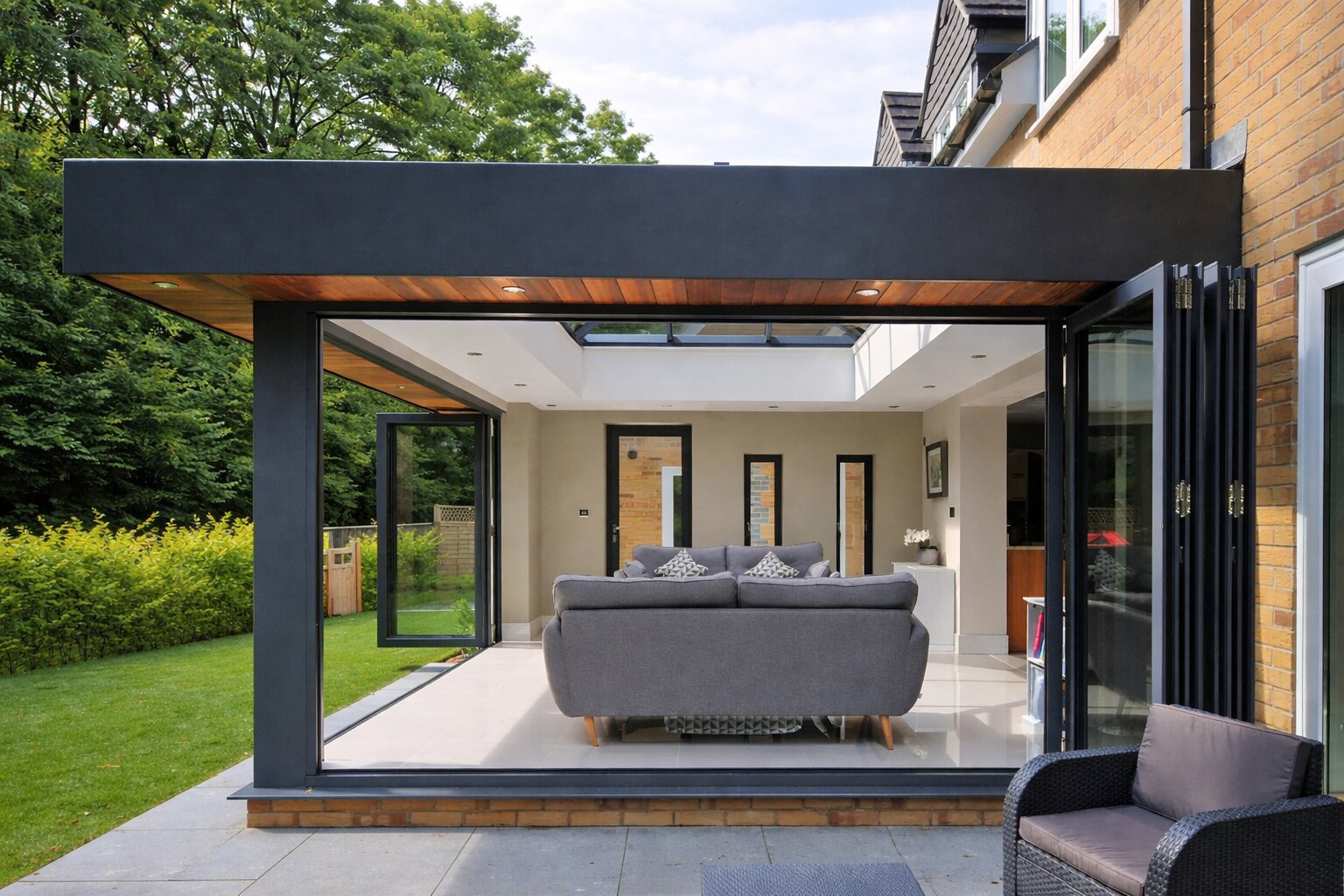
An orangery can do more than extend a kitchen. With the right layout and design approach, it becomes the heart of the home a bright, practical space for cooking, dining, and everyday family life.
Unlike a standard extension, an orangery blends solid structure with large areas of glazing, creating a space that feels open yet comfortable all year round. When designed well, it naturally connects the kitchen, the garden, and the way a home is lived in daily.
Planning Your Orangery Kitchen Extension
A successful orangery begins with careful planning. Before focusing on finishes or design features, it is essential to understand the available space, set a realistic budget, and confirm any planning requirements.
The aim is to create a seamless extension that feels like part of the original home. Whether the goal is a larger kitchen, a dining space, or a multifunctional area, clear planning ensures the space works both visually and practically.
Assessing Space and Budget
Understanding how much space is available helps define how the orangery will function. A well-balanced layout should allow room for cooking, dining, and relaxing without making the area feel overcrowded.
Budget planning should include not just construction, but also flooring, glazing, lighting, heating, and internal finishes. Prioritising these elements early helps create a space that feels complete and avoids unexpected costs during the build, especially when exploring different Orangery Extensions tailored to your property.
Choosing the Right Location
The placement of the orangery influences light, usability, and overall flow. Rear-facing designs are often preferred because they connect directly to the garden and existing kitchen space, making them ideal for daily family use.
Natural light should also be considered. A well-positioned orangery can enhance brightness throughout the home while maintaining comfort across different seasons, particularly when paired with high-quality Orangery Windows & Doors that maximise views and ventilation.
Designing for Family Functionality
An orangery designed as a family hub needs to be flexible. It should support a range of activities, from cooking and dining to relaxing and socialising, without feeling cluttered.
Good design focuses on movement, comfort, and simplicity. Visiting an Orangery Showroom can also help visualise layouts, materials, and finishes before committing to a final design, ensuring the space works effortlessly for everyday life.
Open Plan Layouts That Work
Open-plan layouts are one of the key strengths of an orangery. They allow the kitchen, dining, and living areas to flow together, creating a more social and connected environment.
A central island often becomes the focal point, offering a space for preparation, dining, and interaction. Keeping the layout open improves visibility and makes the space feel larger and more welcoming, especially in well-designed Orangery Extensions.
Creating Zones for Everyday Use
Even within an open-plan design, defining zones helps the space function more effectively. A clear separation between cooking, dining, and seating areas improves organisation while maintaining an open feel.
Subtle design choices such as furniture placement, lighting, or flooring variations can help distinguish these areas without disrupting the overall flow of the room, whether part of an orangery or an Orangery Conservatory setup.
Orangery vs Conservatory
For homeowners seeking a long-term solution, an orangery often offers more comfort and durability than a conservatory. Its combination of solid elements and glazing provides better insulation and a more integrated appearance.
This makes it a stronger choice for year-round use, especially when the space is intended to be part of the main living area rather than a seasonal addition, positioning it as a practical upgrade from a traditional Orangery Conservatory.
Making the Most of Natural Light
Natural light is one of the defining features of an orangery. Large windows, glazed doors, and roof elements allow daylight to fill the space, making it feel brighter and more open.
The key is balance. A well-designed orangery allows light to enhance the space without causing glare or overheating, especially when combined with thoughtfully designed Orangery Windows & Doors.
Roof Lanterns and Skylights
Roof lanterns are a standout feature that bring light into the centre of the room. They add height, brightness, and a sense of openness that enhances the overall feel of the extension.
Positioned correctly, they help distribute light evenly and elevate the orangery from a simple extension into a more refined and inviting living space, particularly when integrated with modern Orangery Roofs designed for both insulation and aesthetics.
Practical Kitchen Features
Functionality is essential when the orangery forms part of the kitchen. Durable materials, efficient storage, and well-planned layouts ensure the space works for everyday use.
The kitchen should remain practical while still feeling open and social. A thoughtful layout allows for smooth movement and makes cooking, dining, and interaction feel effortless within high-quality Orangery Extensions.
Seating and Social Space
To truly function as a family hub, the orangery needs comfortable areas for gathering. Whether it is a dining table, an island with seating, or a relaxed lounge area, the space should encourage interaction.
A welcoming layout makes it easier to host guests, spend time together, and adapt the space for different needs throughout the day in a well-designed Orangery Conservatory or extension.
Bi-Folding Doors and Garden Connection
Bi-folding doors create a strong connection between the orangery and the garden. When opened, they remove the barrier between indoors and outdoors, making the space feel larger and more versatile.
This feature is especially valuable for entertaining and for everyday enjoyment of natural surroundings, particularly when combined with premium Orangery Windows & Doors that enhance both function and style.
Choosing Durable Materials
Because an orangery is used daily, materials should be chosen with long-term performance in mind. Flooring, glazing, frames, and work surfaces all need to balance durability with visual appeal.
High-quality materials not only improve comfort and efficiency but also ensure the space continues to perform well over time. When combined with a well-planned layout, quality Orangery Roofs, and strong connection to natural light, these choices complete the transformation from a simple kitchen extension into a functional and lasting family hub.
If you are planning your next project, now is the perfect time to Upgrade Your Home with a Stunning Customised Orangery, creating a space that brings together design, comfort, and everyday practicality.